In the operations of Steam Power Plants (PLTU), maintaining a balance between energy production and environmental sustainability presents a significant challenge. A primary focus of the industry today is energy efficiency, aiming to support the government’s target in reducing greenhouse gas emissions.
It is often unvalued that large-scale electricity savings frequently originate from small technical components. By understanding these various methods of energy efficiency, we can optimize power plant machinery performance while simultaneously reducing operational costs.
This article will examine how the maintenance of small pipelines, or impulse lines, serves as the key to successful green innovation within the electrical energy sector.
What is an Impulse Line and What is Its Function?
Within a generation unit such as PLTU Paiton Unit 8, there is a vital component known as the furnace pressure transmitter. This device is responsible for monitoring the pressure inside the combustion chamber (furnace).
However, the instrument does not come into direct contact with the hot combustion area; instead, it is connected via a small pipeline called an impulse line.
The primary function of the impulse line is to accurately transmit pressure data from the furnace to the transmitter sensor. This pressure data is highly critical as it is utilized by the control system to regulate the rotational speed of the Induced Draft Fan (ID Fan) motor.
When the impulse line is clean, pressure readings become precise, allowing the ID Fan motor to operate at the appropriate load. This represents one of the technical steps in implementing energy efficiency within a power plant.
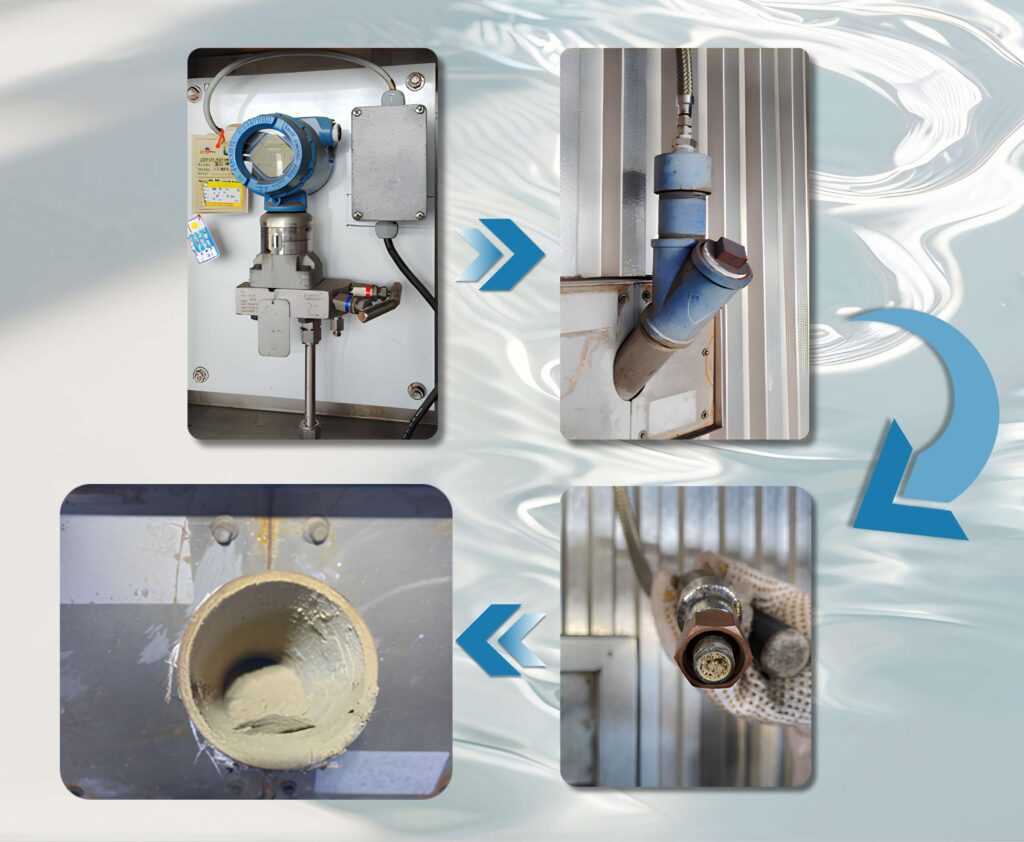
Image Caption: Innovation of an automated cleaning system on the Boiler Furnace Pressure Impulse Line Transmitter to enhance control data reliability.
The Fatal Impact of a Blocked Line (Plugging)
Issues begin to arise when the small pipeline (impulse line) experiences plugging due to the accumulation of dust particles resulting from coal combustion. When an impulse line is obstructed, the pressure signals transmitted to the pressure transmitter become inaccurate.
This signal inaccuracy causes the control system to “interpret” the pressure inside the furnace as unstable or misaligned with the set point. Consequently, the control system automatically adjusts the operation of the Induced Draft Fan (ID Fan) by opening the damper position wider than actually required. This condition increases the flue gas flow (over-draft) and forces the ID Fan motor to operate at a higher load.
Although the ID Fan motor is supplied directly with a voltage of 13.8 kV and operates at a constant speed, the increased damper opening directly raises the aerodynamic load on the fan. This causes the motor to draw a higher electrical current and consume excessive electrical energy compared to normal operating conditions.
This condition clearly contradicts the principles of energy efficiency. The inaccuracy of pressure data not only leads to a waste of electrical energy but also has the potential to indirectly increase flue gas emissions and accelerate the wear and tear of the ID Fan’s mechanical components.
Without routine maintenance and cleanliness control of the impulse line, the potential for electrical energy wastage in the boiler draft system will continue to rise, negatively impacting the efficiency and reliability of the plant’s operations.
Continuous Cleaning Innovation
PT Paiton Energy, through an innovation team under the supervision of the PPU (Air Pollution Control) Team, introduced a technical breakthrough to address issues within the impulse line system. While previous maintenance activities focused more on calibrating electronic equipment (pressure transmitters), attention has now expanded to include controlling the physical cleanliness of the impulse line piping.
The uniqueness of this innovation lies in the implementation of routine impulse line cleaning without halting the operation of the generating unit (online cleaning). This method allows the impulse line to remain clean and function optimally even when the unit operates at full load.
Through the application of this continuous cleaning method, the reliability of the furnace pressure measurement system can be sustained continuously without compromising the continuity of electricity production. This proactive step constitutes a tangible effort toward energy efficiency by ensuring that the boiler draft system operates based on accurate pressure data.
By maintaining the cleanliness of the impulse line, the control system can regulate ID Fan operations more precisely, thereby minimizing the load on the boiler drive motor and making electrical energy consumption more efficient. This innovation has proven to have a direct impact on electrical energy savings on a significant scale, as reflected in the reduction of millions of kWh consumed annually.
Tangible Results: Millions of kWh and Emission Reductions
The impact of paying attention to such small details is profound. Based on data from the period of March to September 2024, the impulse line cleaning innovation in Unit 8 successfully recorded an energy saving of 1,242,894.96 kWh.
From an environmental perspective, this is equivalent to a reduction in emissions by 1,143.08 tons.
| Emission Type | Reduction Amount |
| Carbon Dioxide (CO2) | 1,143.08 Tons |
| Nitrogen Oxides (NOx) | 1.21 Tons |
| Sulfur Dioxide (SO2) | 0.09 Tons |
| Particulate Matter (PM) | 0.05 Tons |
This success demonstrates that energy efficiency is not merely a matter of replacing large machinery, but also involves meticulousness in maintaining instrumentation systems.
Understanding these methods of energy efficiency through the optimization of the ID Fan motor yields financial benefits exceeding IDR 1.8 billion for the company.
Overall, maintaining the cleanliness of the impulse line serves as evidence that simple innovations can deliver massive systemic impacts. The transformation from reactive to proactive maintenance strengthens the work culture while preserving air quality around the power plant area.
The consistent implementation of energy efficiency helps Indonesia achieve its greenhouse gas emission reduction targets for a better future for the planet. By continuously exploring various methods of energy efficiency, the industrial sector can align profitability with ecological responsibility.
Let us continue to support green innovations that begin with precision in the smallest details of daily operations.