Shifting characteristics in coal supply present a distinct challenge to the continuous operation of coal-fired power plants (PLTU). Variations in calorific value, moisture content, ash content, and sulfur composition directly affect boiler performance and auxiliary equipment within the plant. Consequently, the ability to adapt to fuel supply dynamics is crucial for maintaining operational reliability and national energy security.
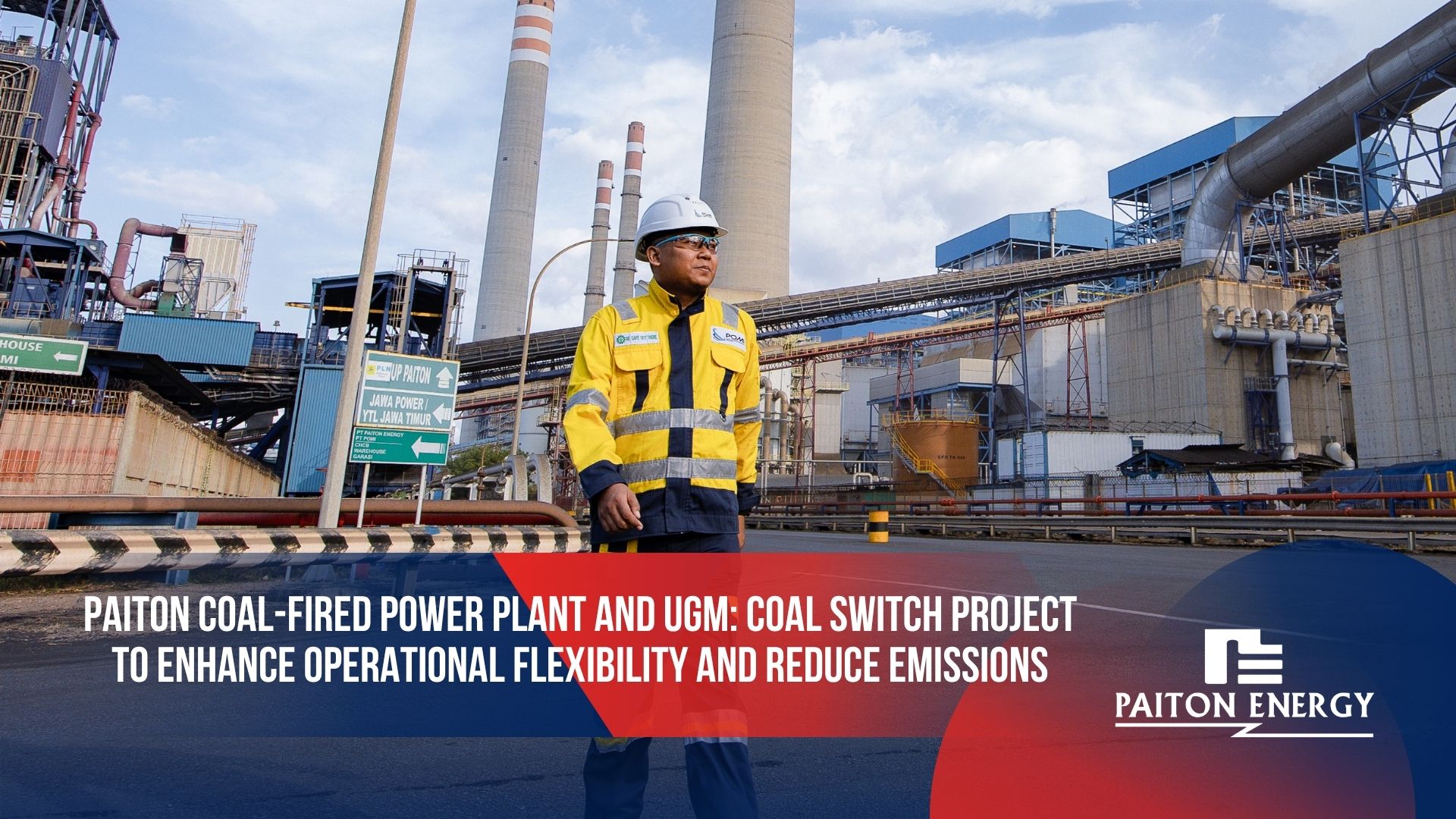
To address this challenge, PT Paiton Energy has initiated the Coal Switch project for Paiton Power Plant Units 3, 7, and 8. To ensure technical readiness in handling low-caloric coal, Paiton Energy has partnered with the Energy Study Center of Universitas Gadjah Mada (PSE UGM) to conduct a series of comprehensive assessments.
Why Must the Use of Low-Caloric Coal Be Studied?
Changing coal quality trends in the market are the primary driver behind Paiton Units 3, 7, and 8 evaluating the use of low-caloric coal. Each type of coal possesses unique characteristics that influence pulverization, combustion, steam generation, ash management, and flue gas emission control systems.
Research from PSE UGM indicates that plant operating boundaries are not solely determined by calorific value and coal properties, but are also heavily influenced by the configuration and capacity of primary equipment.
Pulverization & Flow Load: Low-caloric coal requires a larger volume of fuel to generate equivalent heat, increasing the workload on pulverizers and feeding systems. High moisture levels can also disrupt coal drying efficiency and the stability of pulverized coal flow into the combustion chamber.
Boiler & Ash Impacts: If combustion processes are not adjusted, flame stability may decrease and steam production can be compromised. Increased ash content further elevates the burden on ash-handling systems and raises the risk of slagging and fouling on boiler surfaces.
Through the low-caloric coal study, Paiton Power Plant can establish safe, verified operating limits aligned with equipment design capabilities. As an anticipatory measure, PSE UGM recommends optimizing blending compositions, reinforcing preventive maintenance, and implementing continuous emission monitoring.
The Coal Switch Project and Readiness of Units 3, 7, and 8
This fuel study serves as a vital foundation for implementing the Coal Switch initiative, designed to safely prepare the plant to utilize a broader range of coal characteristics.
At the Paiton Power Plant, this project encompasses Unit 3, Unit 7, and Unit 8, which are operated by PT Paiton Operations and Maintenance Indonesia (POMI):
- Unit 3 (815 MW Capacity): A supercritical technology-based unit. Readiness focuses on evaluating pulverizer, fan, air heater, ash system, and emission control capacities.
- Units 7 and 8 (~615 MW Capacity each): Adjustments concentrate on strengthening boiler cleaning systems and ash management practices.
These differing configurations emphasize that evaluations must be performed specifically tailored to each unit.
Coal Blending Strategies & Equipment Modification
The implemented adaptation strategy involves equipment modifications, expanded ash management capacity, Electrostatic Precipitator (ESP) system rehabilitation, and coal blending (combining high- and low-caloric coals) to meet boiler technical limits and emission standards. This demonstrates that the coal switch is a comprehensive system engineering process, rather than merely substituting one fuel type for another.
The Role of UGM Research in the Coal Switch Project
In this project, UGM acts as a research partner and scientific support provider, rather than a direct executor of the Coal Switch project itself.
The research collaboration between Paiton Energy and UGM focuses on two primary areas:
- Technical Impact Analysis: Providing scientific insights regarding the impacts of low-caloric coal, equipment operational limits, and recommendations for maintenance and emission monitoring.
- Utilization of X-Ray Technology: Supporting the coal blending process by delivering rapid data on mixed coal characteristics, enabling more precise fuel blending operations.
Additional Note on Biomass Initiatives: Alongside the coal study, this collaboration also explores the development of social forestry to build a biomass ecosystem. However, this initiative remains in the biomass ecosystem preparation phase and has not yet entered the co-firing stage at the Paiton Power Plant.
Conclusion: Resilient and Adaptive in Facing Energy Transition
The Coal Switch project at Paiton Power Plant Units 3, 7, and 8 represents a strategic step in responding to future low-quality coal supply dynamics. Through data-driven research support from UGM—ranging from low-caloric coal impact studies to the application of X-ray technology—Paiton Energy strengthens its operational reliability while preserving sustainable environmental management standards.