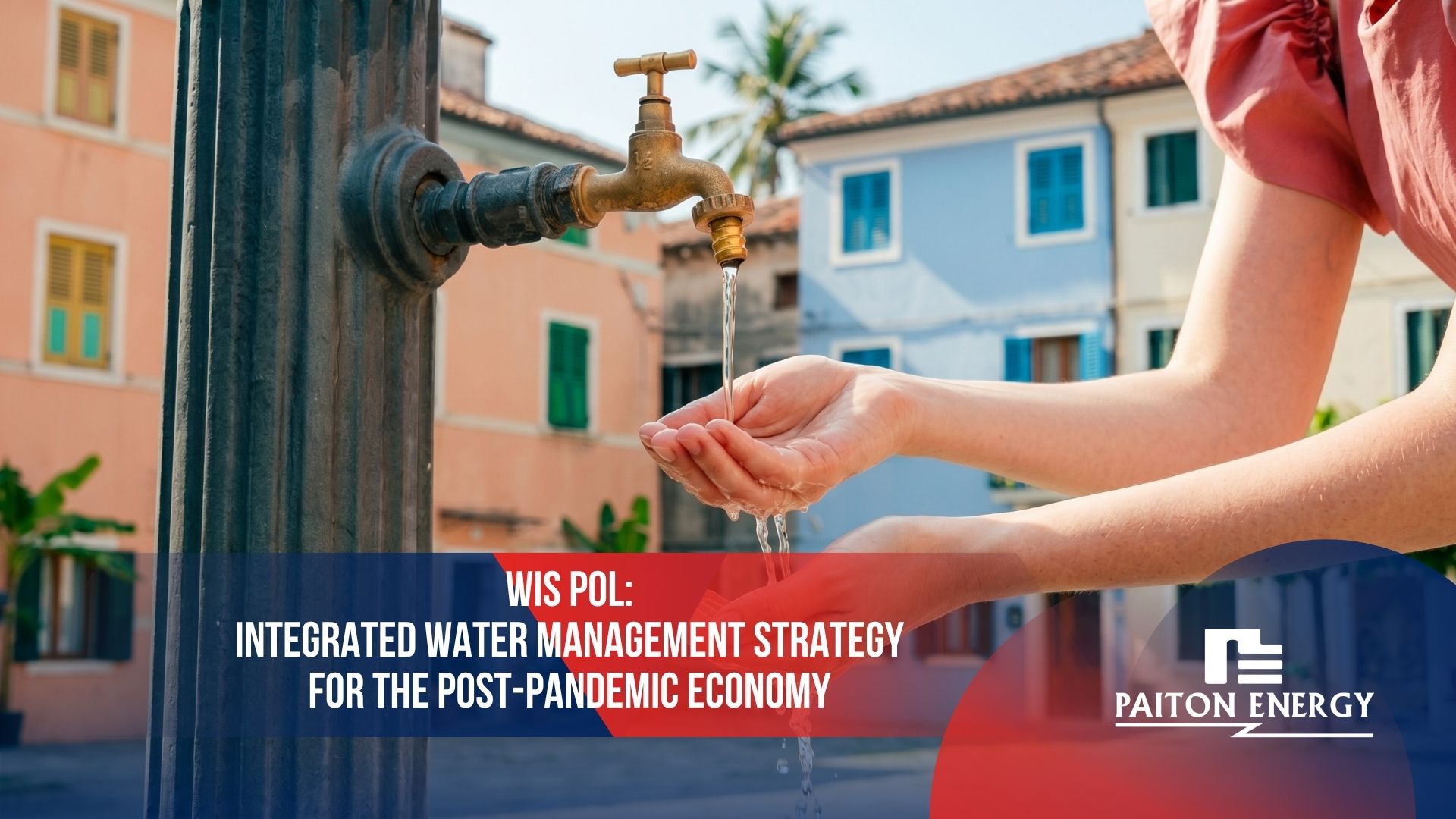
The COVID-19 pandemic served as more than just a health crisis; it was a wake-up call for the business sector to overhaul its social responsibility strategies. PT Paiton Energy seized this momentum by launching the Water Integrated Sustainability Program for Livelihood (WIS POL).
This program addresses sustainability challenges by balancing social, economic, and environmental pillars. Through the implementation of integrated water management, the company strives to foster local self-sufficiency via communally managed clean water enterprises. This initiative serves as a cornerstone for local financial resilience, ensuring that every drop of water flowing through the villages surrounding the company’s operations not only quenches the community’s thirst but also stimulates an economy previously stalled by the pandemic.
Natural Synergy: When Selobanteng Forest “Sustains” Binor
The uniqueness of the WIS POL program lies in its cross-village ecological collaboration. Selobanteng Village, situated in barren hills, was historically water-scarce. However, through the principles of Integrated Water Resources Management (IWRM), the community was encouraged to rehabilitate social forests (hutan rakyat) as vital catchment areas.
The results have been remarkable: the lush Selobanteng forest not only increased water discharge for 78 households locally, but the water flow also reaches the irrigation systems of Binor Village in the coastal region. This innovation demonstrates that environmental preservation upstream is a vital investment for resource availability downstream, creating a mutually beneficial harmony between communities.
“Green” Innovation as a Cost-Reduction Driver
In the past, residents of Binor Village had to spend significantly to purchase water for daily needs. WIS POL has brought a revolutionary change by integrating environmental protection with community needs. Through integrated water management, the cost of water has become highly affordable, ranging from IDR 1,500 to IDR 2,000 per cubic meter.
For coastal residents previously struggling with brackish water, and hill-dwellers who once had to carry jerrycans over long distances, the installation of direct water pipes to their homes represents a tangible form of independence.
From Aid to Entrepreneurship: The Role of BUMDes and Cooperatives
The sustainability of any program relies heavily on governance. WIS POL institutionalizes this innovation through legal entities; in Binor Village, water is managed by Cooperatives and BUMDes (Village-Owned Enterprises), while in Selobanteng, it is managed through organized community and farming groups. This is the essence of integrated water resources management: water is no longer merely a social commodity, but a village economic asset.
Profits from water sales are reinvested into infrastructure maintenance and other small-business capital, fostering a local business ecosystem that is resilient and competitive amidst global economic uncertainty.
Local Leadership and Inclusion: The Key to Sustainability
This program transcends infrastructure; it is fundamentally about people. WIS POL focuses on capacity building for community leadership and organization. Based on IWRM principles, active participation from various stakeholders—including the involvement of women in decision-making—is crucial. When a community possesses a strong sense of ownership, they cease to be mere beneficiaries of aid and become agents of change capable of managing conflicting interests and ensuring their natural resources are preserved for future generations.
Looking Toward a More Resilient Future
Future challenges, such as climate change, are formidable, yet WIS POL has established a solid framework. With the support of private funding and a spirit of collaboration, the program has the potential to evolve toward the use of digital technologies, such as real-time water usage monitoring applications. Consistent application of IWRM will ensure that the balance between profit, people, and the planet is not merely a slogan, but a tangible practice that fosters long-term prosperity and restores the economic dignity of the community.
In conclusion, WIS POL is definitive proof that post-pandemic limitations can be transformed into opportunities through smart, integrated water management strategies. The integration of eco-friendly technology and the strength of local communities has birthed a new entrepreneurship model that pursues not only profit but also environmental conservation. The social and economic sustainability achieved in Binor and Selobanteng serves as an inspiration for future CSR practices. By prioritizing Integrated Water Resources Management, we are not only saving a single water cycle; we are building a fortress of economic resilience capable of withstanding any future crisis.