Boilers in power plants are vital components that function to generate high-pressure steam to drive turbines. However, one of the greatest challenges in maintaining the reliability of power plant boilers is the accumulation of soot, ash, and slagging on thermal pipes.
Left unaddressed, this accumulation reduces heat transfer efficiency and increases fuel consumption. Therefore, a crucial question arises among technicians: How can boilers be cleaned more optimally? The answer now lies in digitalization through Intelligent Soot Blower (ISB) technology.
What is an Intelligent Soot Blower (ISB)?
An Intelligent Soot Blower is an advanced automated system that utilizes sensors, artificial intelligence (AI), and modeling algorithms to precisely clean soot or ash on boiler tubes.
Unlike conventional soot blowers that operate manually or based on fixed time schedules (timers), this intelligent system analyzes operational conditions in real time.
This technology reads critical parameters such as flue gas temperature, pressure drop, and heat flux to determine when and which areas require cleaning.
When plant management evaluates their operations, the primary focus is always on efficiency. To achieve this, operators must understand how to clean a boiler optimally.
The first step is transitioning from scheduled methods to condition-based methods using the ISB. Through this approach, the accumulation of ash slag or coal slag on superheater and reheater tubes can be prevented, ensuring that heat absorption remains optimal.
Furthermore, the ISB plays a primary function in energy conservation. The system significantly reduces the consumption of steam or compressed air used during blowing, as blowing is performed only when conditions strictly require it.
The use of ISB also contributes directly to extending tube life by preventing tube wall erosion caused by over-blowing.
These advantages provide the scientific answer to the question of how to clean boilers optimally in the power generation industry, particularly within the steam power plant (PLTU) sector.
THERMEX Implementation: Digital Innovation in Steam Power Plants
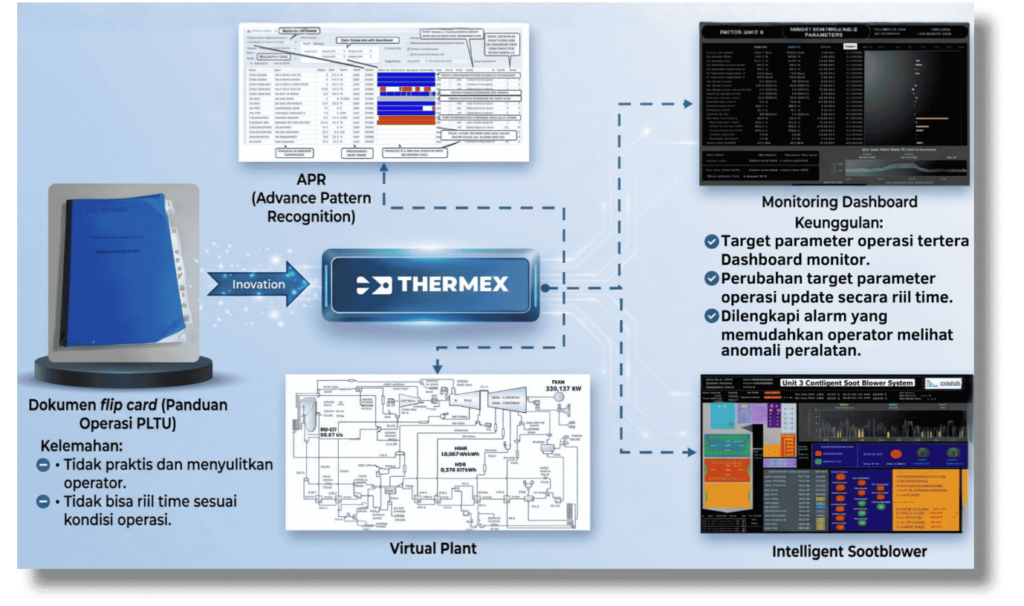
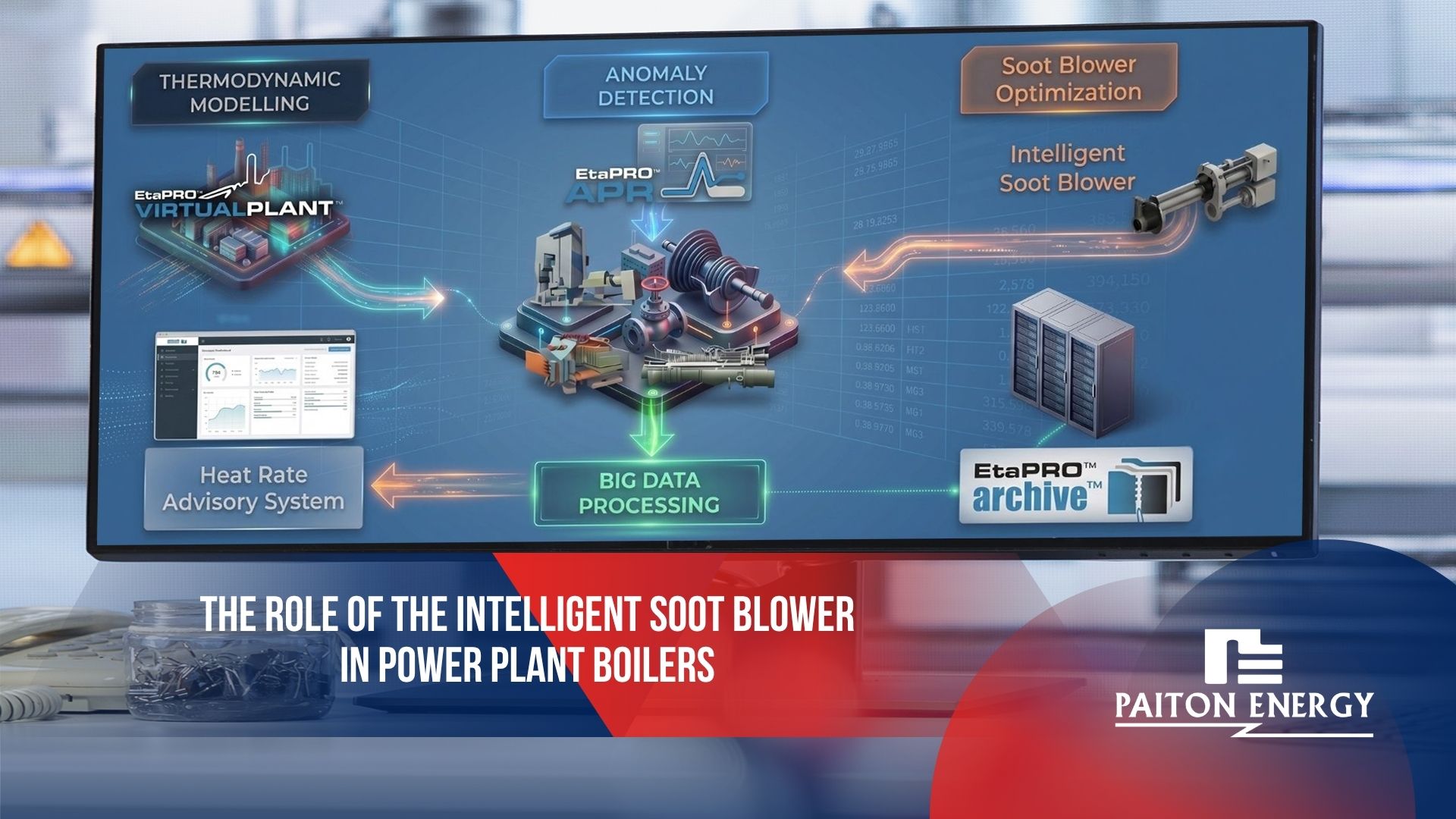
On a practical scale, this ISB technology is integrated into an advanced system named the Thermal Heat Rate Management Expert System (THERMEX). THERMEX is a real-time performance monitoring application based on thermodynamic modeling and machine learning using EtaPRO software.
This innovative system is officially implemented to optimize operations at Paiton Energy’s PLTU Paiton Units 3, 7, and 8.
Before this system was applied to power plant boilers, operational parameters were presented in physical document formats that lacked practicality, making it difficult for operators to access information quickly.
The presence of THERMEX at PLTU Paiton Units 3, 7, and 8 transforms this data into an interactive digital dashboard comprising several integrated modules:
- Monitoring Dashboard: Provides a real-time view of plant performance for efficient operational management.
- Advanced Pattern Recognition (APR): Early detects equipment anomalies before triggering significant damage.
- VirtualPlant: Models thermodynamic processes to simulate various operational scenarios in order to discover potential heat rate improvements.
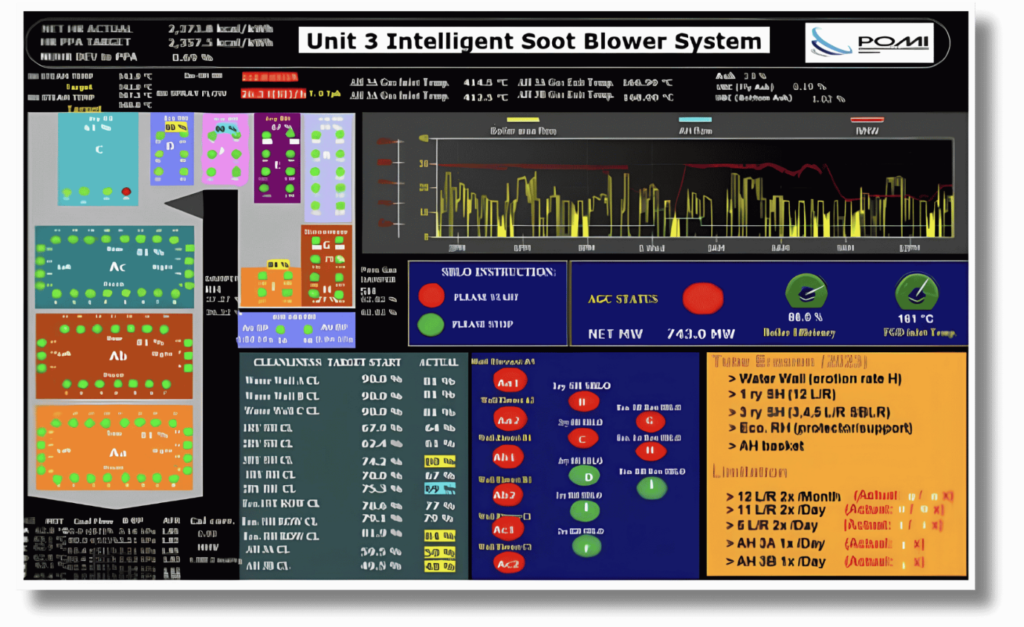
- Intelligent Soot Blower (ISB): Provides specific recommendations regarding soot blower operations to clean identified dirty areas of power plant boiler tubes.
Through the ISB module, the algorithm compares actual cleanliness factor values with optimal targets based on historical performance data from the respective unit.
If the actual value falls below the target, the system triggers an alarm and provides operational guidance to the operator. With this data-driven guidance, operators at PLTU Paiton Units 3, 7, and 8 no longer need to guess how to clean boilers correctly in the field.
Power Plant Boiler Optimization
The full implementation of the THERMEX system along with its ISB module has been deployed as a strategic step to optimize power plant boiler performance at PT Paiton Energy.
This integration is specifically designed to enhance energy efficiency, reduce fuel consumption, and lower greenhouse gas emissions across various load levels.
In daily operations, the system addresses the challenge of how to correctly clean boilers automatically. Operators simply monitor the dashboard and execute cleaning recommendations exclusively for areas that are genuinely fouled.
This approach maintains power plant boiler operating parameters at optimal levels, reduces the frequency of unnecessary cleaning, and proactively and predictively minimizes maintenance costs.
By utilizing 2023 performance data as a baseline through linear regression analysis, the full implementation of THERMEX beginning in 2024 has successfully quantified energy efficiency accurately and demonstrated a significant reduction in operational costs for power plant boilers.
Digital innovations such as the ISB within THERMEX prove that managing internal unit cleanliness at PLTU Paiton Units 3, 7, and 8 is the primary key to maintaining a sustainable and environmentally friendly reliable electricity supply.