The issue of household waste, particularly baby diaper waste, has posed a serious threat to environmental sustainability in Indonesia. Disposable diapers have long been regarded as persistent waste that is extremely difficult to decompose, frequently ending up polluting river streams and aquatic ecosystems.
However, through an appropriate circular economy approach, such waste can be converted into products of both aesthetic and economic value. Innovations such as the utilization of baby diaper waste are now beginning to open the public’s eyes to the fact that waste is not necessarily the end of a cycle.
With proper education, innovation-based waste management can serve as a tangible step in reducing household carbon footprints and creating a cleaner, more sustainable environment for our shared future.
Turning Threats into Opportunities in Binor Village
Binor Village, located in Paiton Subdistrict, Probolinggo Regency, has demonstrated that behavioral change can originate from simple innovations with far-reaching impacts.
One of the most prominent initiatives is Lagilapo (an innovative solution for diaper waste management in coastal areas and villages), which serves as a reference for local residents in waste processing. The community now implements a used diaper collection system intelligently integrated with local integrated health post (posyandu) activities.
Fully supported by PT Paiton Energy and PT POMI, this program has successfully transformed public perceptions regarding baby diaper waste, which was previously frequently discarded carelessly into rivers due to myths or a lack of awareness.
Through hygienic cleaning, washing, and drying processes, the Family Welfare Movement (PKK) mothers have successfully processed these materials into unique, durable plant pots of high market value.
The Repot Painting Competition: Creative Education for the Younger Generation
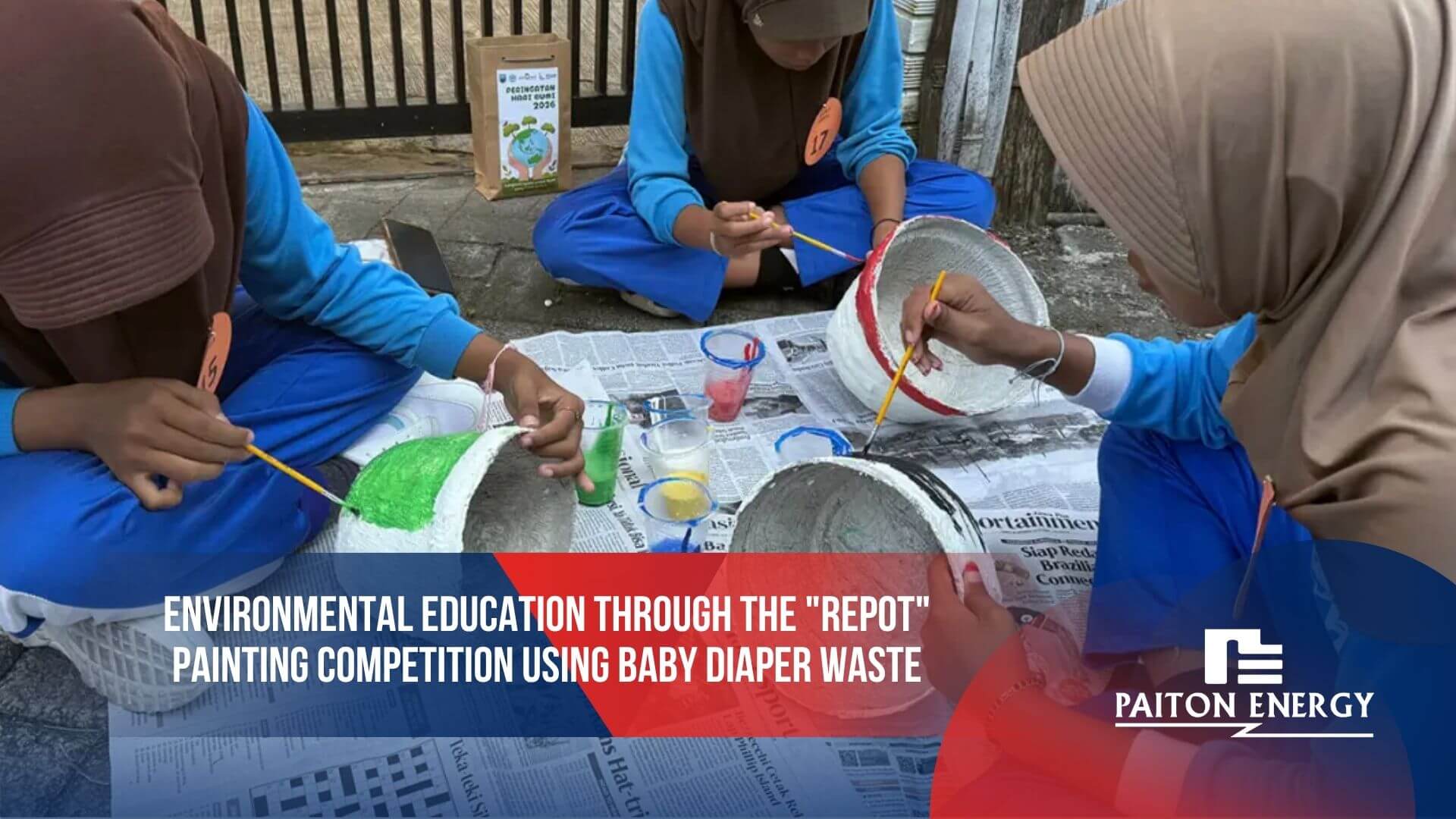
One of the highlights of this environmental movement is the organization of the “Repot” Painting Competition (rekarena popok gebey pot, where leftover diapers are utilized as pots). Held in commemoration of Earth Day, this activity involved approximately 150 kindergarten and elementary school students in Binor Village.
This competition is not merely an ordinary display of creativity, but rather an educational medium fostering environmental awareness from an early age. Here, children are invited to interact directly with recycled pots as their painting media.
Through this activity, the younger generation is taught that items deemed as waste can hold high aesthetic value if managed correctly. The involvement of children is crucial in instilling waste management awareness.
The resulting artworks painted on baby diaper waste media serve not only as displays, but also as symbols of hope. According to the management of PT POMI, the participation of children in this competition represents an essential initial educational measure to ensure they understand the importance of preserving ecosystems from a young age.
Technical Transformation and Economic Value
Technically, the utilization of baby diaper waste into pots involves modifying the polymer structure of the diapers to render them durable and functional as planting media.
Binor Village’s success in implementing this practice indicates that baby diaper waste can be transformed into valuable assets provided that the community is equipped with proper stimulation and supporting infrastructure.
This innovation is also fully supported by the Probolinggo Regency Environmental Agency, as it is regarded as a creative idea worthy of emulation.
These recycled pots possess a selling price ranging from IDR 10,000 to IDR 30,000, which consequently provides supplementary income for families. Supported by appropriate technology, baby diaper waste—once an ecological burden—has now been converted into an aesthetic element in home yards.
Toward a Sustainable Future
In conclusion, the lengthy journey of waste transformation into aesthetic creations in Binor Village provides valuable lessons regarding the power of inclusive community collaboration.
Through consistent initiatives, the community has successfully turned the threat of baby diaper waste into a golden opportunity that yields positive impacts on both the local economy and overall environmental health.
The success of initiatives such as Lagilapo underscores that the management of baby diaper waste does not necessarily have to be complicated or require substantial costs.
Merely through creativity and collective awareness, we can significantly minimize household carbon footprints.
Let us continue to support the utilization of baby diaper waste as a concrete step toward creating a greener, cleaner, and more sustainable Earth for all our future generations.