
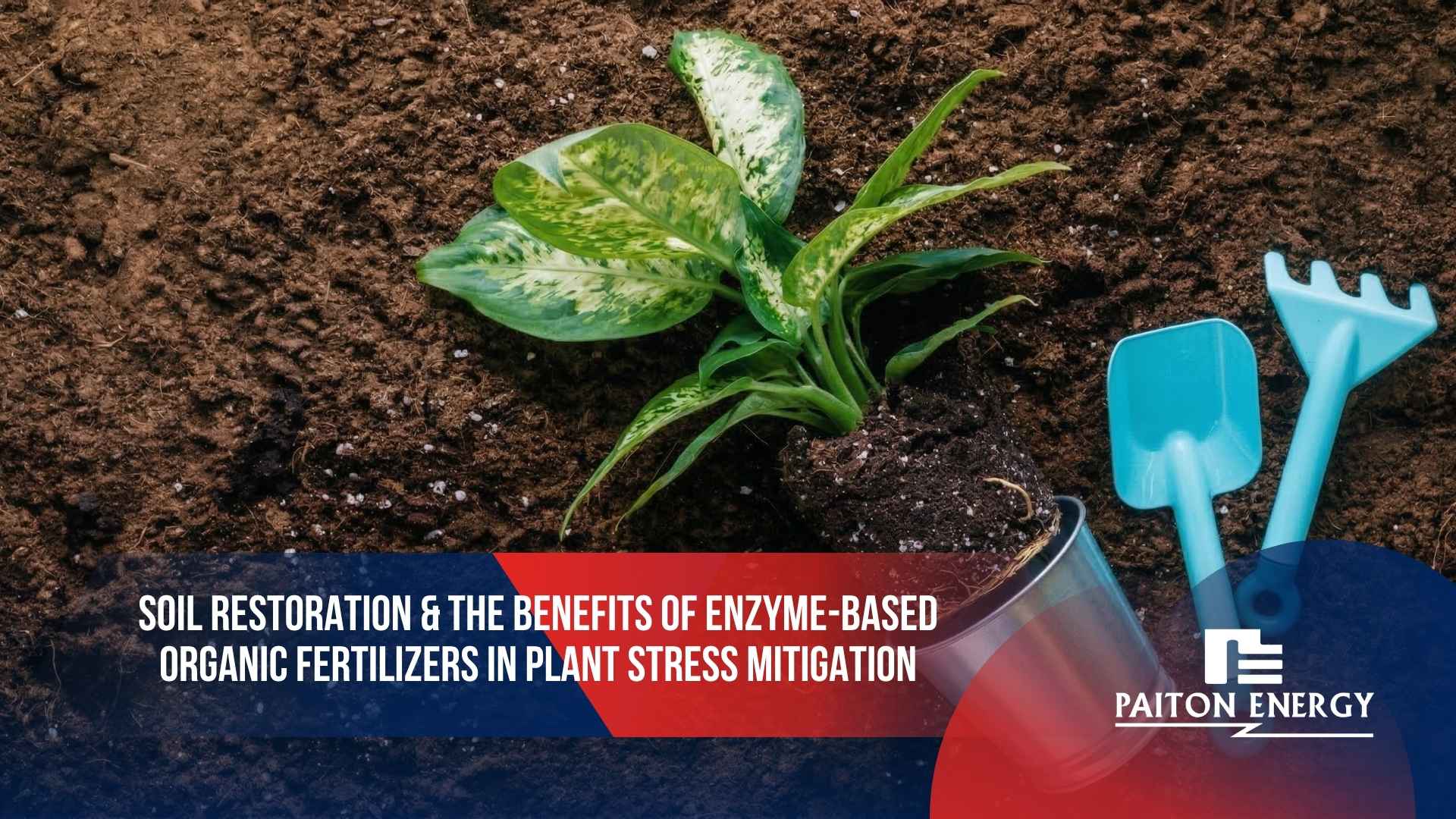
The endeavor to maintain the planet’s health begins with our collective awareness of managing organic waste responsibly through the use of organic fertilizers.
In the context of modern agriculture, the role of organic fertilizers is increasingly vital for rehabilitating soil structures that have become degraded due to prolonged exposure to synthetic chemicals.
Many farmers and environmentalists are transitioning to organic fertilizers owing to their eco-friendly properties and their capacity to provide long-term nutritional support for microbial ecosystems.
By consistently applying organic fertilizers, we do not merely nourish plants; we actively engage in sustainable soil restoration to ensure food security and preserve the ecological balance for future generations.
Defining Organic Fertilizer and the EnzymPoz Innovation
To understand these advancements, one must evaluate organic fertilizer through the lens of recent innovation. Traditionally, organic fertilizer is recognized as material derived from the decomposition of plant residues, animal manure, and human waste.
However, through the EnzymPoz innovation—developed by PT Paiton Energy and initiated by Erfin Budianto, Aris Dwi Wicaksono, and Reska Pragusta—the definition has evolved into a sophisticated bio-technological product.
EnzymPoz represents an integrated development of eco-enzyme and compost programs aimed at processing organic waste, such as fruit peels and leaf litter, into products with extraordinary agronomic benefits. This innovation merges two existing methods—eco-enzymes and composting—which are typically managed separately.
By integrating them, EnzymPoz achieves superior efficacy. The production process involves incorporating liquid eco-enzymes and fermentation residues directly into the composting cycle. This addresses the future of organic fertilizers: products that contain not only macro-nutrients but are also enriched with functional enzymes and proteins.
Agronomic Benefits and Protein Content
A primary advantage of this enzyme-based fertilizer is the drastic improvement in nutritional quality. According to literature reviews, the eco-enzyme residues used in this blend contain approximately mg/mL of protein.
These proteins consist of long-chain amino acids linked by peptide bonds, which are essential for plant development.
From an agronomic perspective, the protein content provides natural protection against pests and diseases. Furthermore, proteins act as chelating agents for micronutrients, facilitating more efficient absorption by the root systems.
Soil microbial activity is significantly enhanced, which in turn supports optimal nutrient assimilation. Consequently, the observed effects are more rapid compared to traditional fertilizers, as the nutrients are provided in a highly bioavailable form.
Plant Stress Mitigation and Photosynthesis
Amidst the challenges of extreme climate change, plant stress has become a significant barrier to agricultural productivity. EnzymPoz serves as a mitigation solution; its protein and enzyme content boosts plant metabolism, strengthens chlorophyll density, and optimizes photosynthesis.
With a robust metabolism, plants exhibit higher resilience to extreme conditions such as high temperatures, droughts, and sudden pest outbreaks. The integration of liquid eco-enzymes and fermented residues ensures that the soil is not only physically fertile but also biologically healthy.
This allows the soil to return to its original function as a growing medium capable of decomposing complex organic matter into simpler, environmentally friendly forms.
Environmental Impact and Zero Waste Strategy
Beyond its agricultural benefits, EnzymPoz is a cornerstone of a Zero Waste strategy. This program converts organic waste—which previously posed environmental pollution risks—into high-value ecological and economic assets.
The utilization of eco-enzyme byproducts, which are usually discarded, fully enriches the fertilizer’s nutritional profile.
Quantitatively, the program has recorded impressive results, producing approximately 10,984 kg of compost. This efficiency reduces the burden on landfills and provides economic savings amounting to tens of millions of rupiah for both the company and the participating communities.
In conclusion, it is imperative to continue educating the public on the merits of enzyme-enriched organic fertilizers. The implementation of EnzymPoz is a concrete step toward restoring degraded land.
By shifting to organic alternatives, we allow the soil to “breathe” and recover its ecosystem naturally. Let us establish the application of organic fertilizer as the primary standard in sustainable agriculture.
Abundant harvests must coexist with environmental conservation, a goal achievable through our commitment to high-quality organic solutions.