Wood pellet production has become a primary pillar in global efforts to reduce greenhouse gas emissions. As an eco-friendly biomass fuel, wood pellets offer a concrete solution to replace fossil fuels, which carry a high carbon footprint.
Amidst the urgency of the energy transition, PT Paiton Energy has introduced a strategic initiative that integrates renewable energy technology with local wisdom. The primary focus is optimizing community forests—not only as providers of timber for carpentry but as sustainable sources of green energy raw materials for the future.
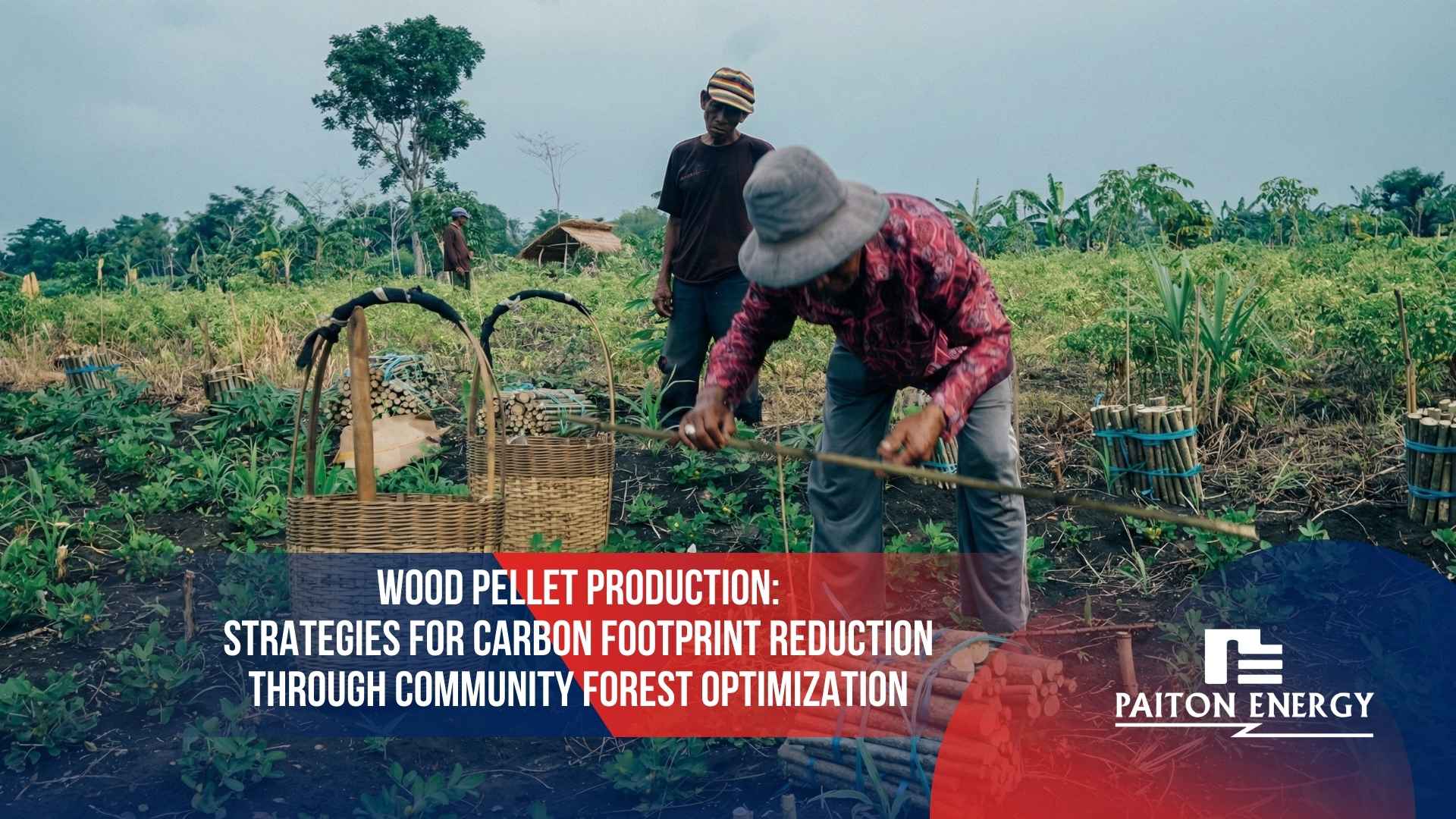
From an environmental conservation perspective, community forests are crucial assets that function as natural carbon sinks and biomass providers. Through the Sustainable Pellet Eco-Friendly Fuel (SUSPECFUEL) program, PT Paiton Energy encourages the utilization of waste from forest plants, such as teak and Gmelina, grown on community land.
This synergy ensures that community forests serve both as ecosystem balancers and as the driving force behind the local wood pellet industry. With proper management, community forests represent the answer to the challenges of clean energy scarcity in the future.
Optimizing Waste into High-Quality Wood Pellets
A major transformation has occurred in Selobanteng Village, where the local furniture industry is flourishing. PT Paiton Energy’s involvement in managing community forests has provided certain access to timber raw materials for the community.
Hatim, a local furniture craftsman, shared how difficult it was to find quality wood in the past. “Since the arrival of PT Paiton Energy, teak raw materials have become easily accessible within our own village,” he remarked.
This success is evident in the proliferation of furniture businesses in the village. Previously, there were only a handful of wood workshops; today, there are over 23 active furniture Small and Medium Industries (SMIs) that serve as the main economic backbone.
However, the growth of the furniture industry created a new challenge: sawdust waste reaching 100 tons per month. This is where wood pellet innovation plays a vital role. PT Paiton Energy empowers craftsmen to process furniture production residues and branches from community forests into high-quality wood pellets.
Note: Wood pellets currently serve as a transitional solution. They function to drastically reduce the carbon footprint within the fuel mix; however, coal remains the primary support due to supply stability factors and existing boiler capacities.
Through technical assistance and the provision of processing machinery, waste that was once valueless is now converted into an effective co-firing fuel to reduce coal dependency at the Paiton Power Plant. This process effectively lowers the industrial carbon footprint while providing additional economic value to SMI practitioners.
Community Empowerment and Economic Resilience
The primary beneficiaries of this program are the community groups directly involved in the wood pellet supply chain. Twenty-three furniture craft groups now possess the technical skills to produce biomass that meets industrial standards. PT Paiton Energy ensures that the community does not merely witness the energy transition but acts as its primary protagonist.
The establishment of community-based cooperatives provides a platform for residents to manage production independently, ensuring that the resulting economies of scale are enjoyed equitably by all villagers.
The use of Gamal plants in wood pellet production offers dual benefits. These plants are fast-growing and capable of thriving on degraded land; thus, their use in community forest areas serves as a means of land conservation.
With an average craftsman turnover reaching IDR 92,720,000 per year, this community-based wood pellet industry has proven capable of significantly strengthening the local economy without compromising environmental sustainability.
Through integrated wood pellet production, carbon footprints can be systematically reduced while improving the standard of living in rural areas. This program proves that community forests possess much broader economic potential when managed sustainably with a touch of renewable energy innovation.
The community is increasingly realizing that community forests are an investment for the future that yields tangible results for their livelihoods. The success in Selobanteng Village serves as concrete evidence that community forests are the key to achieving inclusive national energy independence.
By preserving community forests, we are not just producing wood pellets, we are bequeathing a greener Earth to future generations.