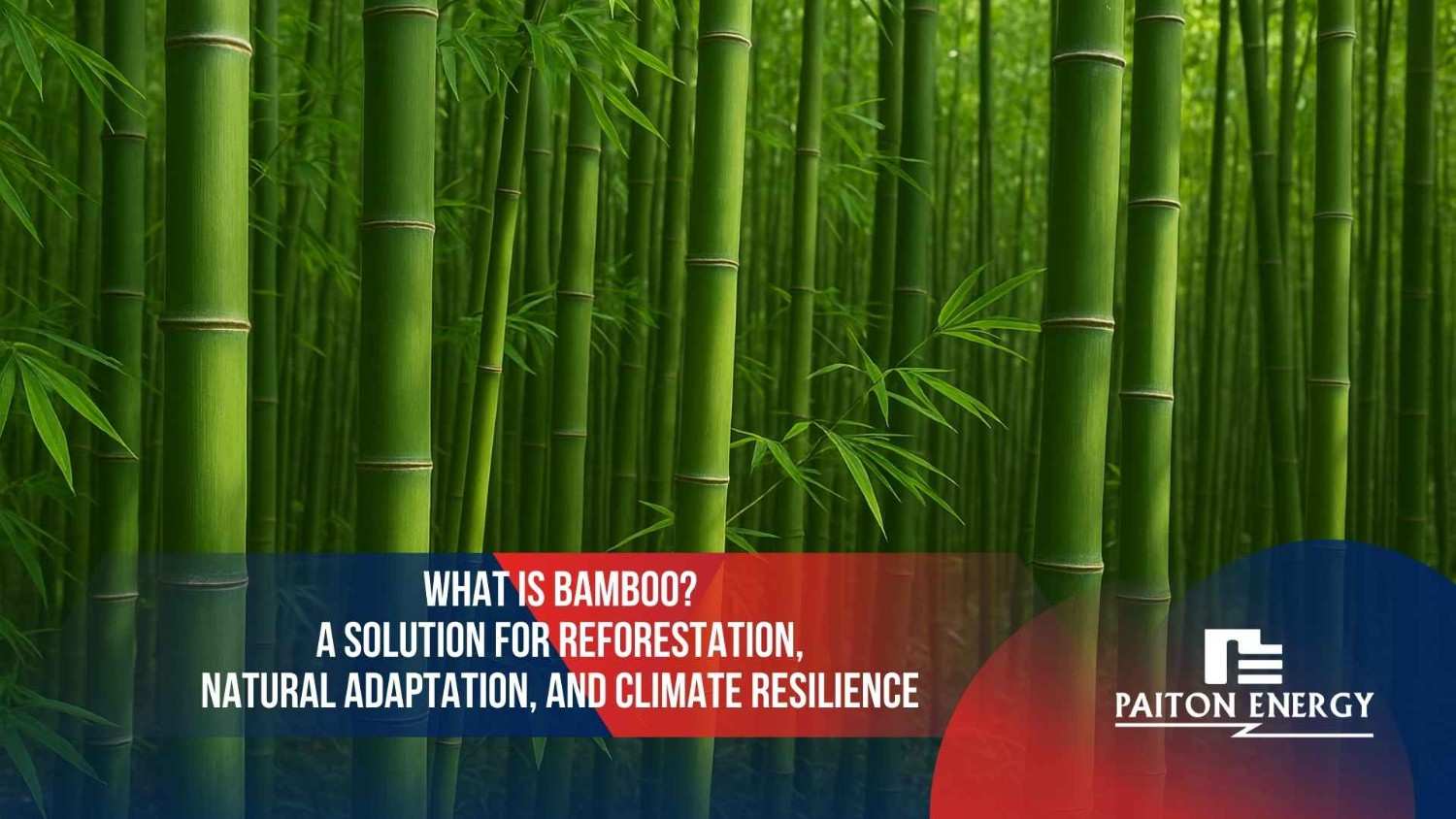
Bamboo is not just an ordinary plant; it is a green hero for the Earth. Its position as a pioneer plant for land conservation makes it a primary focus in global reforestation efforts.
One of the keys to its success lies in a deep understanding of how the bamboo tree adapts to harsh and degraded environments, establishing it as a superior fortress of natural resilience amidst the challenges of climate change.
Introducing “Green Gold”: What is Bamboo?
What is bamboo? Bamboo is a member of the grass family (Poaceae) known for having the fastest growth rate on land. Its advantage is not only in its speed but also in its massive environmental contribution. Bamboo is nicknamed “Green Gold” because it offers extraordinary economic and ecological value.
Ecologically, it is an efficient and regenerative carbon sink. Economically, bamboo can be selectively harvested—felling only mature culms ensures the clump’s sustainability—providing a sustainable resource and regular income for communities.
Bamboo’s ecological advantage as a carbon absorber is based on its very rapid growth rate. Bamboo has a higher carbon fixation rate compared to other hardwood tree species and produces 35% more oxygen. Its biomass increase in certain species under optimal conditions can reach 10-30% per year.
BBIT produces superior tissue culture seedlings, ensuring elite genotypes, uniform growth, and a superior root system. It is important to understand what superior, mass-produced bamboo is: seedlings with stronger roots that quickly bind the soil.
A Natural Fortress: Adaptation and Land Conservation
Bamboo’s exceptional conservation ability is a concrete answer to the question: how does the bamboo tree adapt to extreme environments? The key lies in its strong rhizome root system and fibrous roots.
The lateral “root hair” network on BBIT bamboo can grow up to 5 meters away from the clump. These roots work to compactly bind the soil, making it a primary solution for erosion control.
In fact, bamboo has been proven capable of reducing soil erosion by up to 80%. Furthermore, it can reduce surface water runoff by up to 25%, increase groundwater storage, and significantly raise water tables. Species like Bambusa vulgaris are commonly planted along riverbanks as a living fence to prevent erosion.
In degraded and former mining lands, how does the bamboo tree adapt to a toxic environment? Bamboo demonstrates its prowess as a phytoremediation plant.
It has been proven capable of absorbing heavy metal ions such as cadmium, zinc, and lead. Bamboo also naturally grows in slightly acidic soil, giving it a great opportunity to overcome adverse pH conditions. Furthermore, from an economic standpoint, multiple benefits arise when we know what bamboo that can be harvested sustainably.
Concrete Action: Bamboo’s Role in Climate Mitigation and Biodiversity
The commitment to environmental preservation and community empowerment realized through PT Paiton Energy’s Kehati program in Probolinggo is a concrete example of synergy between industry and nature.
In January 2024, as part of the One Million Tree Movement Day, PT Paiton Energy carried out a Fun Camp activity and planted 1,000 bamboo seedlings at the Betek Rest Area, Krucil District.
Bamboo was chosen for its superior ability to absorb water, improve soil quality, and reduce the risk of floods and erosion. This program not only increases green cover and creates new habitats for wildlife but also actively mitigates the effects of climate change through carbon sequestration.
Data shows 1 hectare of bamboo can sequester approximately 59 tons of CO2 per year. So, ecologically, what is the most beneficial bamboo for conservation? The answer is the species with the strongest root system that can grow quickly.
Long-Term Resilience and Future Hope
Bamboo’s success in land rehabilitation has been proven across various parts of the world. In Chishui, China, over 52,880 hectares of land were successfully restored using bamboo, resulting in a 78.56% reduction in soil erosion.
In Lumajang, East Java, a bamboo forest successfully restored the debit of a water spring. This is concrete evidence of how the bamboo tree adapts to challenging environments.
With a selective harvesting cycle that does not damage the clump, bamboo offers regular income while maintaining the ecosystem’s sustainability. Making bamboo the “green gold” is a sustainable investment for our planet.
Understanding what bamboo is as a pioneer plant and seeing how the bamboo tree adapts to the environment demonstrates that it is an effective, fast, and economical solution for building natural resilience and realizing a greener future.