The Human Immunodeficiency Virus (HIV) and Acquired Immunodeficiency Syndrome (AIDS) remain global health issues that demand serious attention, especially at the community level.
Without adequate education, myths and ignorance can fuel dangerous stigma, while simultaneously hindering effective prevention efforts.
In the communities surrounding PT Paiton Energy, as in many other regions, a correct understanding of how HIV/AIDS is transmitted is key to building a collective defense against the spread of the virus.
This article will thoroughly examine why HIV and AIDS education is a fundamental pillar in prevention efforts, and how accurate understanding can empower the community.
Setting the Record Straight: Understanding HIV and AIDS
What Are HIV and AIDS?
HIV is a virus that attacks the body’s immune system. Over time, if left untreated, the virus can destroy the body’s ability to fight off infections and diseases, which then progresses to AIDS, the final stage of HIV infection.
It is crucial to differentiate between the two: a person who is HIV-positive does not necessarily have AIDS, and with appropriate Antiretroviral (ARV) treatment, HIV can be managed so that the infected person can live a healthy and productive life.
Answering the Key Question: How is HIV/AIDS Transmitted?
One of the biggest barriers to prevention is misunderstanding the modes of transmission. Effective education must clearly answer the question: How is HIV/AIDS transmitted? HIV transmission occurs through the exchange of certain body fluids from an infected person. These fluids include:
- Blood
- Semen
- Pre-ejaculatory fluid
- Vaginal fluids
- Breast milk
The most common modes of transmission are through unprotected sexual intercourse, sharing of needles and syringes, and from mother to child during pregnancy, childbirth, or breastfeeding.
Conversely, the public must also know that the HIV virus is not transmitted through:
- Physical touch, such as shaking hands or hugging.
- Sharing food or eating utensils.
- Water, such as swimming pools or public toilets.
- Bites from mosquitoes or other insects.
- Saliva (except in the presence of open sores).
Correcting this information is crucial to reducing discrimination against People Living with HIV/AIDS (PLHIV).
The Role of Education in Eradicating Stigma
Stigma is the primary enemy in the fight against HIV and AIDS. When the community is unsure of the facts regarding how HIV/AIDS is transmitted, they tend to avoid and discriminate against PLHIV.
This unfounded fear makes PLHIV reluctant to seek treatment, testing, or support, which ultimately increases the risk of transmission in the community.
Inclusive education teaches empathy and the understanding that HIV is a manageable medical condition, not a social penalty. With the right understanding, the community can:
- Support Testing and Treatment: Encourage early detection and adherence to ARV treatment.
- Create a Safe Environment: Ensure PLHIV can live without fear of discrimination in the workplace, school, or social environment.
- Take the Right Prevention Steps: Individuals know exactly what measures to take to protect themselves.
HIV education is a long-term investment in the health and social cohesion of a community.
Corporate Contribution to HIV/AIDS Education in Surrounding Communities
As an integral part of the community, PT Paiton Energy, along with PT POMI, views the role of large corporations in HIV prevention and control as extremely important. Through our Corporate Social Responsibility (CSR) program, we actively conduct HIV/AIDS socialization to raise awareness and education in schools and surrounding communities.
This program aims to: enhance understanding of HIV/AIDS, reduce stigma and discrimination against People Living with HIV/AIDS (PLHIV), and foster empathy in treating PLHIV.
We collaborate with health institutions, communities, and public service centers to support HIV/AIDS management through: Counseling and Workshops, Mentoring of HIV care activists, and provision of support facilities for PLHIV and their families.
Company Commitment to Combat Stigma and Discrimination
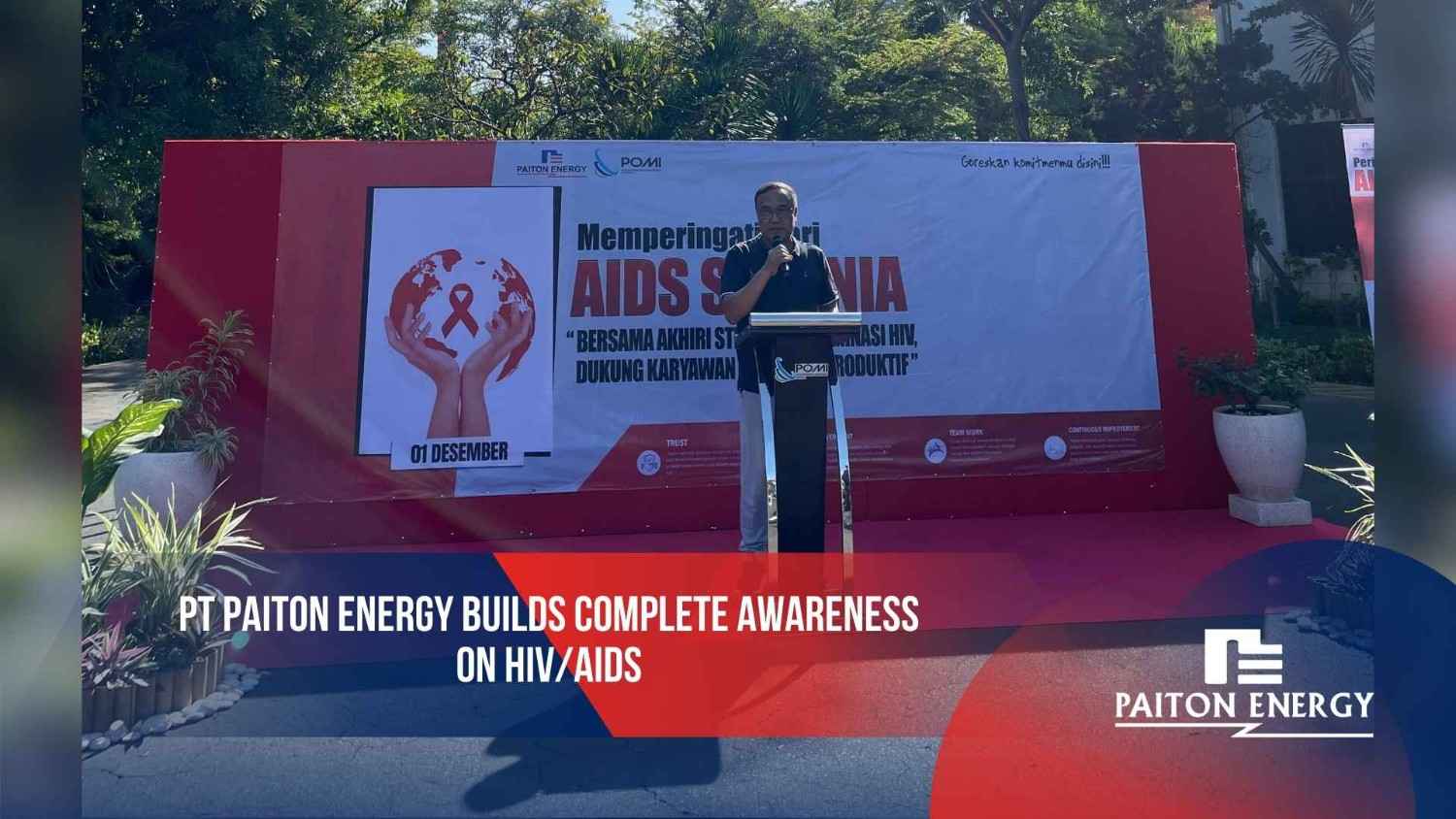
To commemorate World AIDS Day and as part of the Company’s commitment to combat stigma and discrimination against people living with HIV/AIDS, we have carried out activities including:
- Joint Aerobics Session, collaborating with the HCFC Dept.
- Ribbon Pinning (Red Ribbon): Ribbons were distributed to employees attending the aerobics session, followed by the distribution of ribbons to all employees in units 3 & 7-8.
- The signing of the joint commitment regarding the stigma of HIV/AIDS on the banner was initiated by Senior Management of PT POMI including Mr. Sugiyanto as President Director and Senior Managers namely, Mr. Jasmadi, and Mr. Yoza Jamal, and continued by the employees who were present, and was then carried out door-to-door.
President Director of PT POMI, Sugiyanto, also stated the Company’s commitment:
“Both PT POMI and PT Paiton Energy do not discriminate against HIV/AIDS survivors and will continuously conduct socialization, education, awareness, learning, and mentoring for HIV/AIDS survivors.”
Education is the best vaccine against ignorance. Ensuring every community member understands what HIV is, how it is transmitted, and how to prevent it is the most vital first step.
Collaborative efforts between companies, government, and the community, such as those undertaken by PT Paiton Energy, serve as an effective model for creating a community that is informed, empathetic, and free from the threat of HIV and AIDS. By strengthening the pillar of education, we can achieve the vision of a healthy and inclusive community.