With the arrival of Ramadan 2026, socio-economic challenges such as extreme poverty and stunting rates remain critical issues requiring systematic intervention. Disparities in access to quality nutrition and sustainable livelihoods often serve as the primary barriers to community welfare in vulnerable regions.
Recognizing these challenges, PT Paiton Energy has introduced an innovative empowerment strategy centered on strengthening local Micro, Small, and Medium Enterprises (MSMEs) as a long-term solution.
This initiative is designed to ensure that communities do not merely receive transient aid but are equipped to build a robust foundation of economic independence.
During Ramadan 2026, this economic transformation is expected to serve as the cornerstone for underprivileged families to achieve sustainable and inclusive empowerment.
Identifying the Root Causes: From Stunting to Extreme Poverty
The long-term strategic program for the 2026–2030 period focuses on enhancing human capital. PT Paiton Energy maintains that high stunting rates are not merely a health issue but a systemic consequence of economic constraints.
Consequently, the adopted approach integrates family nutritional interventions with household capacity building.
The primary objective is to ensure that throughout the year, including during the month of Ramadan 2026, vulnerable families possess both nutritional and economic resilience.
This strategy ensures that stunting reduction does not conclude with food assistance but extends to behavioral changes and the active engagement of local potential.
Strategic Roadmap: Incubators and Economic Diversification
Under the 2026-2030 Strategic Plan, local economic development is concentrated in three key locations: Randutatah Village, Pondokkelor Village, and Betek Village.
In these areas, “Local MSME Incubators” have been established to provide entrepreneurship training and intensive business mentorship.
This empowerment targets several key stakeholders:
- MSME and Local Economy Actors: Increasing product value-add and diversifying income streams to foster village economic autonomy.
- Vulnerable Micro-MSMEs: Assisting those with limited access to capital and markets to enable them to compete on a broader scale.
- Tourism Village Development: Promoting a tourism sector based on village potential to reduce dependence on low-productivity informal sectors.
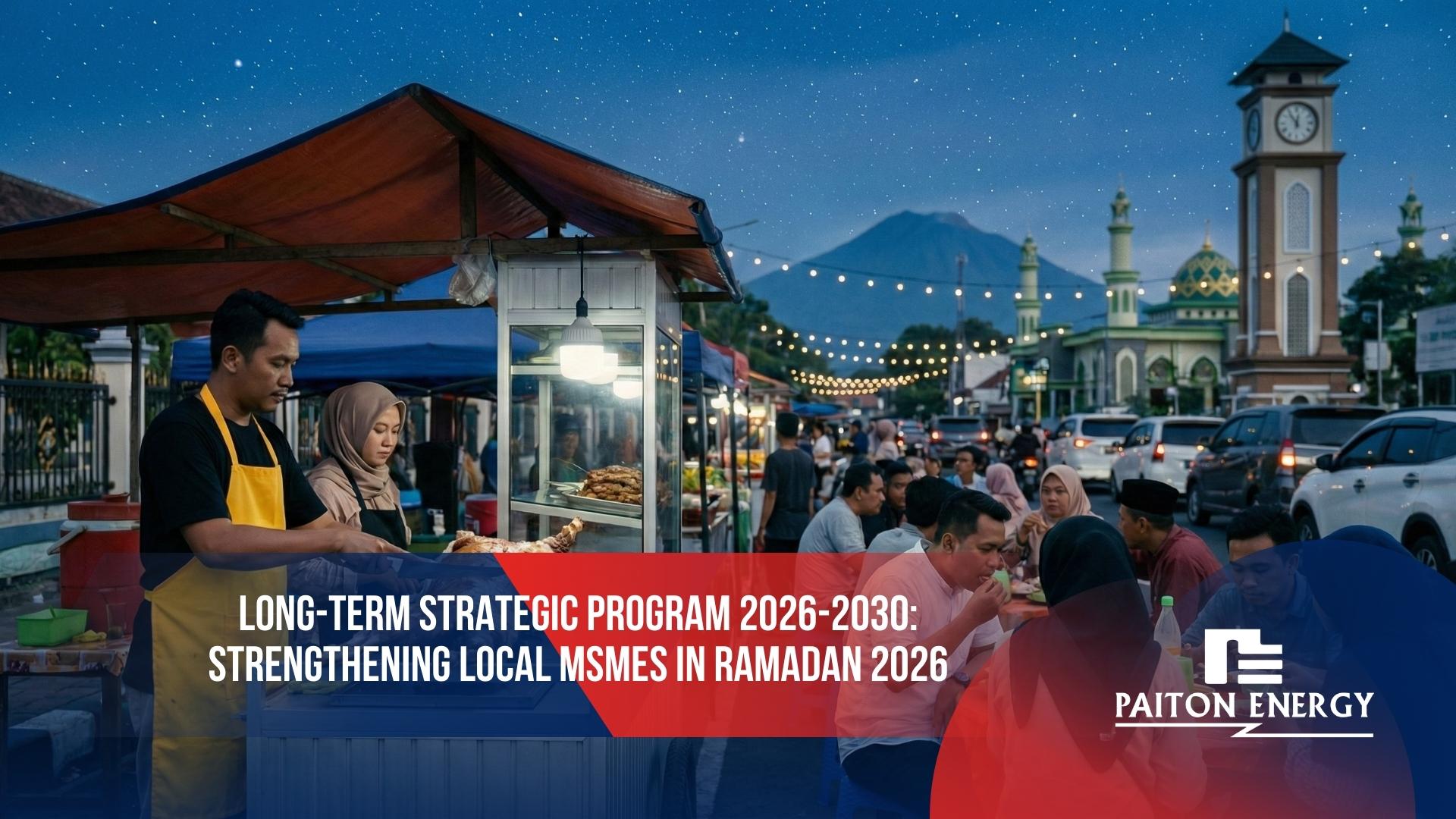
These measures become particularly relevant during Ramadan 2026, when market demand for local products typically surges. With enhanced human resource capacity, local MSMEs are expected to effectively capture these market opportunities.
Five-Year Work Plan (2026–2030)
PT Paiton Energy has developed a structured timeline to ensure the program’s success:
- 2026: Focused on human resource capacity building and tourism promotion. This serves as the initial momentum, coinciding with preparations for Ramadan 2026.
- 2027–2029: Infrastructure development, massive business expansion, continuous training, and rigorous program monitoring.
- 2030: The independence preparation phase and comprehensive impact evaluation to ensure the program can be managed autonomously by the community.
The expected output is the growth of an alternative economy capable of uplifting local communities, with the primary outcome being a reduction in the Poverty Gap Index (PGI).
Exit Strategy and Sustainability
To ensure that the benefits of the program persist after the mentorship period concludes, PT Paiton Energy has prepared an exit strategy covering three aspects:
- Utility Aspect: Guaranteeing that the increase in community income remains stable.
- Institutional Aspect: Strengthening cooperatives or MSME associations as legal and resilient community economic entities.
- Local Hero Aspect: Promoting inspiring MSME actors, local trainers, and creative youth figures who will drive village progress in the future.
The ultimate success of this Long-Term Strategic Program will result in more resilient family fortitude, particularly when navigating the economic dynamics of Ramadan 2026.
Through inclusive and equitable development, vulnerable groups now have the opportunity to participate actively in social and environmental progress.
The spirit of food independence being championed is not merely rhetoric but a tangible action providing sustainable protection for the community.
The hope is that the solemnity of Ramadan 2026 can be experienced by all levels of society without the burden of anxiety over basic needs. Through strong collaboration, local MSMEs will become the primary pillars in realizing equitable welfare for all during Ramadan 2026.