On the hillsides of Selobanteng, Situbondo, the lush greenery is more than just a view; it represents the lifeblood of thousands of residents. For years, this community struggled against arid land and a debilitating water crisis.
However, through a long-term initiative spearheaded by PT Paiton Energy and PT POMI, the landscape of this village has been completely revitalized. The cornerstone of this change lies in the development of community forests—forests grown on privately owned land with the dual purpose of environmental conservation and sustainable economic growth.
The Return of Water: Impact on Households and Livestock
In the past, water was an expensive commodity for the residents of Selobanteng. Nirto, a local cattle farmer, recalls the hardships faced during the dry seasons.
“It used to be very difficult. We had to pay 10,000 IDR for just two jerry cans of water,” he explains. For a farmer, water is not merely a domestic necessity but the vital resource for livestock, which often represents their sole financial asset.
Since 2020, following massive reforestation efforts, six natural springs in Selobanteng have gradually recovered. Mahmudah, a local resident, has witnessed a significant change in her daily life. While cooking and cleaning were once a daily struggle, water is now abundantly available.
Selamet Riyadi echoed this sentiment, noting that household activities have become significantly easier thanks to the water infrastructure supported by PT Paiton Energy and PT POMI.
The community forest has successfully fulfilled its hydrological function: absorbing rainwater into the soil and channeling it back through clear, sustainable springs.
Economic Empowerment: From Saplings to Finished Furniture
The economic transformation in Selobanteng has been driven by the newfound accessibility of raw materials provided by nature.
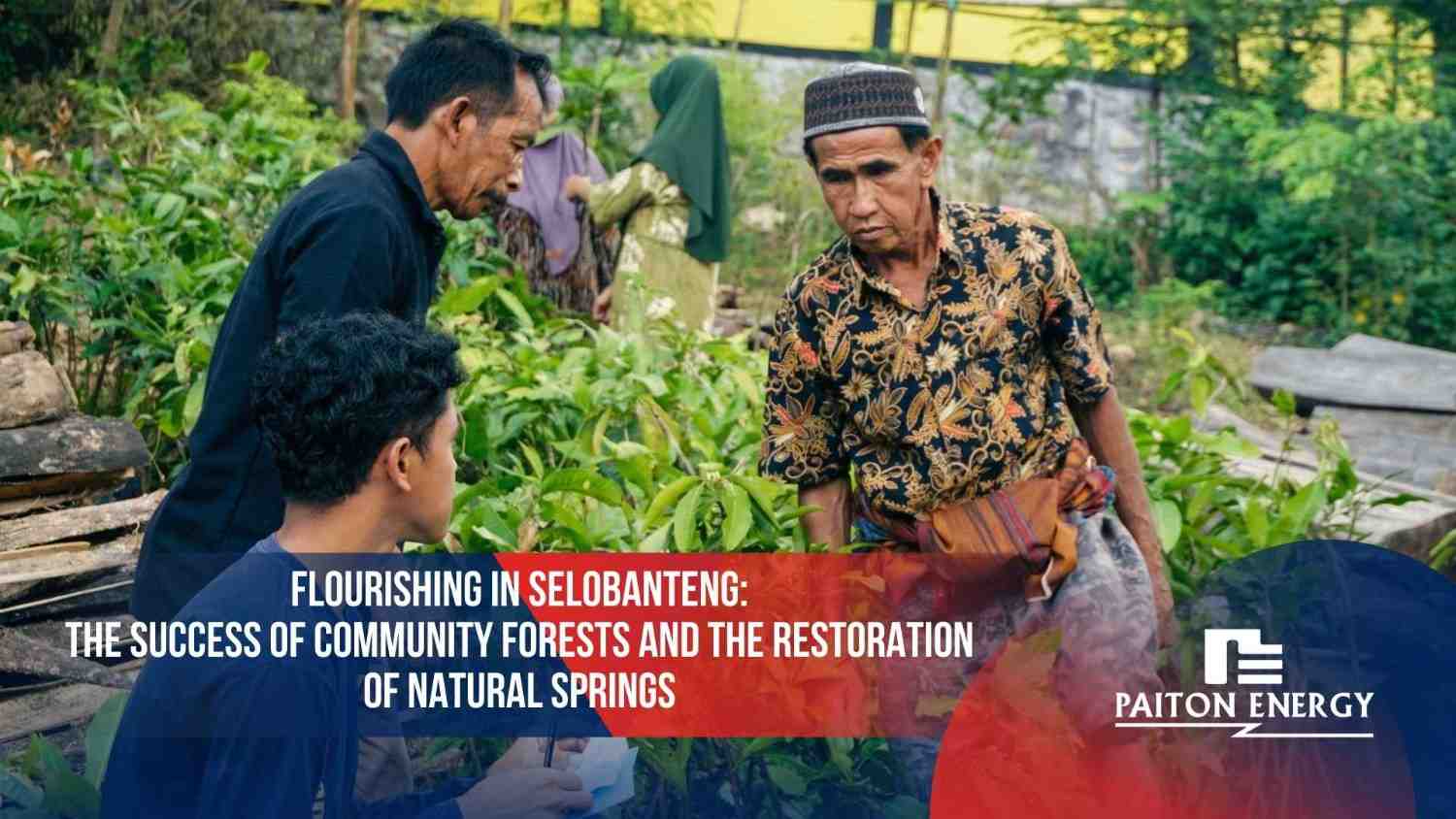
Supported by PT POMI, Dicky Suprapto, Chairman of the Local Farmers Group (Gapoktan), explained that approximately 10,000 teak saplings are supplied annually to residents free of charge.
This is the essence of community forest development: empowering the community with the resources and knowledge to manage their land independently.
The impact on Small and Medium Enterprises (SMEs) is profound. Hatim, a local furniture craftsman, shared how difficult it once was to source quality timber.
“Since the involvement of PT Paiton Energy, teak wood has become easily accessible within our own village,” he said. This success is evident in the burgeoning furniture industry; where there were once only a few workshops, there are now over 70 active furniture SMEs serving as the village’s primary economic pillar.
Cross-Border Benefits: Reaching the Coastal Areas
The benefits of a greener Selobanteng extend beyond village borders. Binor Village, located downstream in the coastal area, has also reaped the rewards of upstream conservation.
Before the restoration of the forest, Binor was frequently hit by floods during the rainy season and suffered from a shortage of fresh water.
Sugianto, Plant Manager of PT POMI, expressed his gratitude that the risk of flooding has been drastically reduced.
Furthermore, the coastal water quality has undergone a natural transformation. “Initially, the water for the coastal community was brackish or salty. Now, they have access to fresh water,” explained Hostifa Wati, the Village Head of Binor.
This shift in water quality has directly improved food security, allowing coastal residents to implement the Sustainable Food House Program (KRPL).
Additionally, the dense forest has invited new wildlife back into the ecosystem, creating a harmonious balance between nature and the community.
A Vision for the Future: A Legacy for Generations
PT Paiton Energy’s long-term commitment is not just about planting trees; it is about fostering collective environmental consciousness. Dicky Suprapto hopes that this spirit of conservation will continue to take root in every resident.
He credited PT POMI not only for providing saplings but also for educating the community on environmental stewardship.
The community now aspires for Selobanteng to serve as a national model for how the industrial sector and local citizens can collaborate to restore the Earth. They remain confident that the success of the community forest is the key to facing future climate change challenges.
With a protected forest, water will continue to flow, the furniture industry will thrive, and the harmony between human prosperity and environmental sustainability will endure.