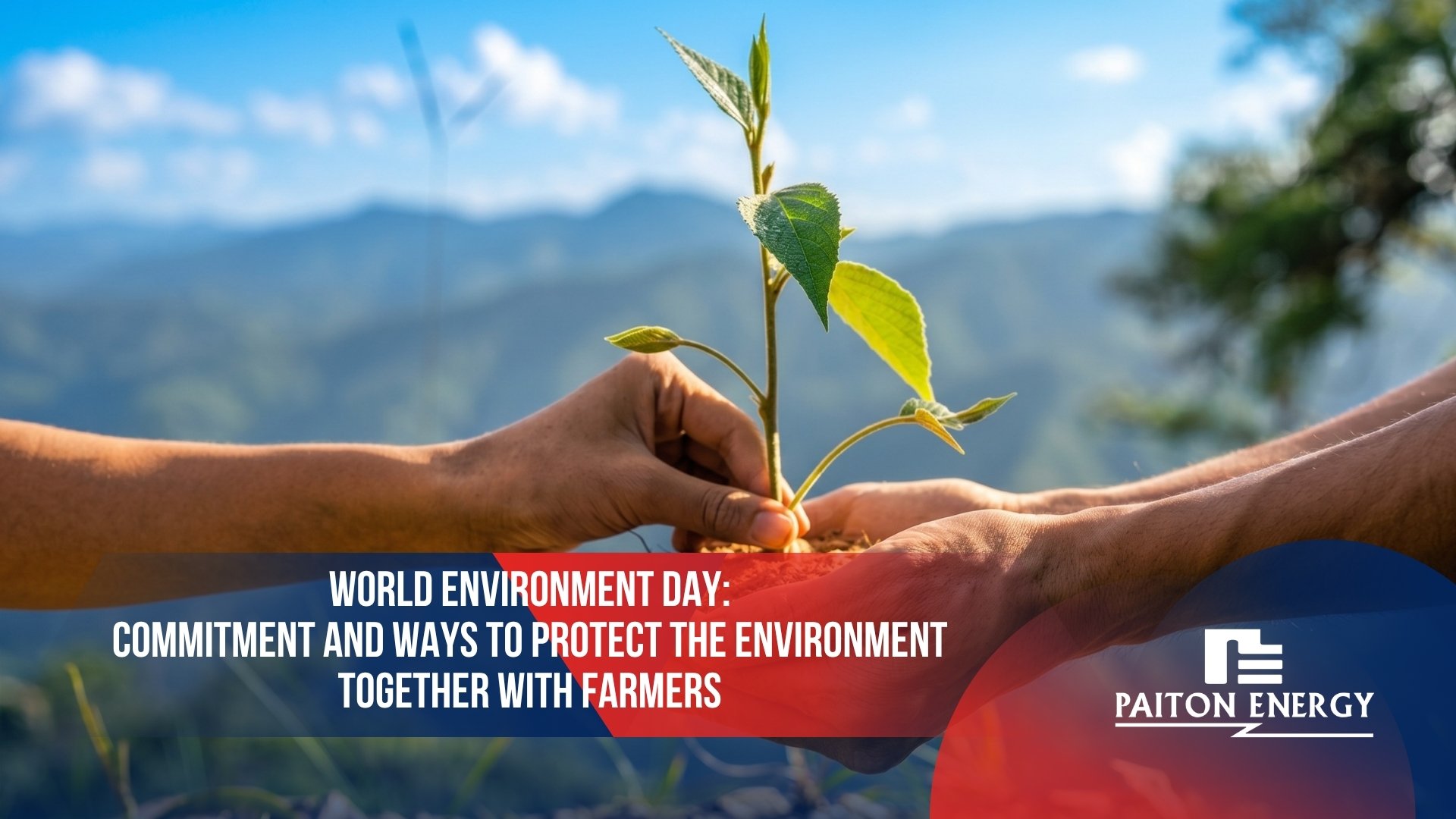
Every June 5th, people across the globe commemorate World Environment Day. This moment is more than just an annual ceremony; it is a global reminder of the importance of tangible action for the planet’s survival.
Facing a global climate crisis marked by a rise in the earth’s temperature of 1.1–1.5 degrees Celsius, collective commitment is the key. Through this momentum, we are invited to understand how to protect the environment to slow the rate of ecosystem degradation. The question is: how can we effectively maintain environmental sustainability amidst pressing economic needs? The answer lies in active community involvement and cross-sectoral collaboration that is adaptive, equitable, and sustainable.
Cross-Sector Synergy in a Just Energy Transition
The community’s genuine commitment to caring for the earth is clearly reflected in the implementation of the “Social Innovation in Energy Plantation Forest Development in Social Forests” program, developed by Paiton Energy.
Through the 2026 Paiton Energy Social Forest development plan, it is evident that this restoration effort is actively driven by a synergy between the Faculty of Forestry at Universitas Gadjah Mada (UGM) and PT Paiton Energy. This collaboration focuses on mentoring the Ranu Makmur and Alam Subur Forest Farmer Groups (KTH) in Gading District. The program serves as concrete proof of how to protect the environment by involving the local community as the front-line guardians of community forests.
This Energy Plantation Forest (HTE) planting activity contributes directly to the national Forestry and Other Land Uses (FOLU) Net Sink 2030 target, which aims for more than a 60% reduction in national emissions in the forestry sector.
As a form of understanding the importance of maintaining environmental sustainability through real action, farmers in the Ranu Makmur and Alam Subur Forest Farmer Groups in Probolinggo Regency have been planting Gliricidia sepium (gamal) trees on a massive scale. Records from January 2025 to April 2026 show that the community has successfully planted 66,212 gamal seedlings across 61.91 hectares of land.
Mitigating Field Obstacles and Local Self-Reliance
The journey to protect an ecosystem is never free from biophysical challenges. According to technical monitoring data from the July–December 2026 HTE Activity Report, approximately 2,520 trees suffered from stunted growth due to soil factors, seed quality, and aphid attacks.
The community’s steadfast commitment was put to the test; through technical guidance, they demonstrated a responsive approach to environmental stewardship by replanting 5,882 seedlings and implementing precision fertilization using optimized urea and Phonska formulations.
Furthermore, the community is encouraged to achieve absolute self-reliance through the construction of self-funded water reservoirs and independent nursery centers. KTH Alam Subur has successfully produced 5,000 high-quality seedlings locally to minimize the risk of damage during distribution.
As an economic incentive, the program introduces crop diversification through an intercropping scheme on dry land. Thousands of Siger Avocado seedlings, which can yield 70–150 kg of fruit per tree, as well as longan trees, will be integrated into the farmers’ plots. This innovative solution shows how to maintain environmental sustainability without sacrificing food management space, as energy crops are planted regularly in an east-west orientation so as not to block sunlight for staple food commodities.
Three Strategic Operational Steps for Silvicultural Intervention
To ensure the success of the Sustainable Multipurpose Forest program in Probolinggo, UGM PKKS and PT Paiton Energy have implemented three operational intervention flows as a technical guide for the community:
- Step 1: Integrated Preparation – The process begins with identifying the biophysical condition of the land and drafting social contracts with the farmers. This is followed by the establishment of independent nurseries by the farmer groups (targeting 10,000 seedlings) and the procurement of supporting instruments such as direction stakes, bamboo stakes (100 cm, to ensure seedlings grow upright), and manure.
- Step 2: Planting Execution – During the planting stage on the ±30-hectare area, stakes are installed specifically at a depth of 25 cm underground, with 75 cm remaining above the surface. Planting holes are 30 cm deep and enriched with compost, followed by vertical planting that follows the contours of the sloping land.
- Step 3: Post-Planting Maintenance – The final stage focuses on weeding, replanting new seedlings, and weed mitigation. The main critical performance indicator (KPI) at this stage is ensuring the survival rate of the plants is above 80%, which is then followed by a post-planting carbon stock baseline calculation.
Strengthening Institutional Foundations for the Future
The sustainability of this ecological action is secured by strengthening the organizational legality aspect. Periodic mentoring is provided to farmer groups to draft 10-year Social Forestry Work Plans (RKPS) and formalize their articles of association (AD and ART).
Independent and legally incorporated Forest Farmer Groups will eventually be able to manage grassroots business incubators independently, ranging from the downstream processing of banana and cassava chips to preparing for community-based carbon trading infrastructure.
On the other hand, this commitment is bolstered by the Global Accelerator on Jobs and Social Protection for Just Transitions (GA) program in Probolinggo Regency, East Java. This program—a collaboration between the UN and Bappenas—is designed to ensure that the transition to clean energy continues to protect the livelihoods of local residents, especially those involved in the biomass co-firing raw material supply chain. The focus of the Global Accelerator program is on developing the social and economic independence of the community.
The momentum of World Environment Day reminds us again that the fate of the earth depends on consistent collective action. The green track record of the Probolinggo community provides a real-world example that the most effective way to protect the environment is to place community welfare at the heart of conservation itself. When the economy and ecology move hand in hand, the question of how to maintain environmental sustainability is no longer just a discourse on paper, but a real movement growing in every inch of our motherland.