The occasion of Eid al-Adha is consistently synonymous with the spirit of sacrifice and the act of sharing. For Muslims, the tradition of celebrating this holy day is typically manifested through the slaughter of sacrificial animals, which are then distributed to those in need.
However, the true essence of Eid al-Adha transcends mere annual rituals. It serves as a momentum to strengthen social solidarity and elevate the community’s economic standing.
By embracing this philosophy, this year’s Eid al-Adha celebration marks a turning point for the social responsibility strategies of PT Paiton Energy and PT POMI.
Their focus has shifted from providing transient aid to implementing community empowerment programs that yield long-term, sustainable impacts on the welfare of village residents.
A Paradigm Shift: From Charity to Self-Sufficiency
For years, PT Paiton Energy and PT POMI have routinely distributed sacrificial animals, cows and goats, to villages and Islamic boarding schools within their operational areas.
Previously, this followed a pure charity scheme, where animals were provided in a ready-to-slaughter condition for immediate distribution on the holiday.
While spiritually commendable, this approach was found to have limitations; its benefits were short-term and had yet to provide a significant structural impact on the community’s economic strengthening.
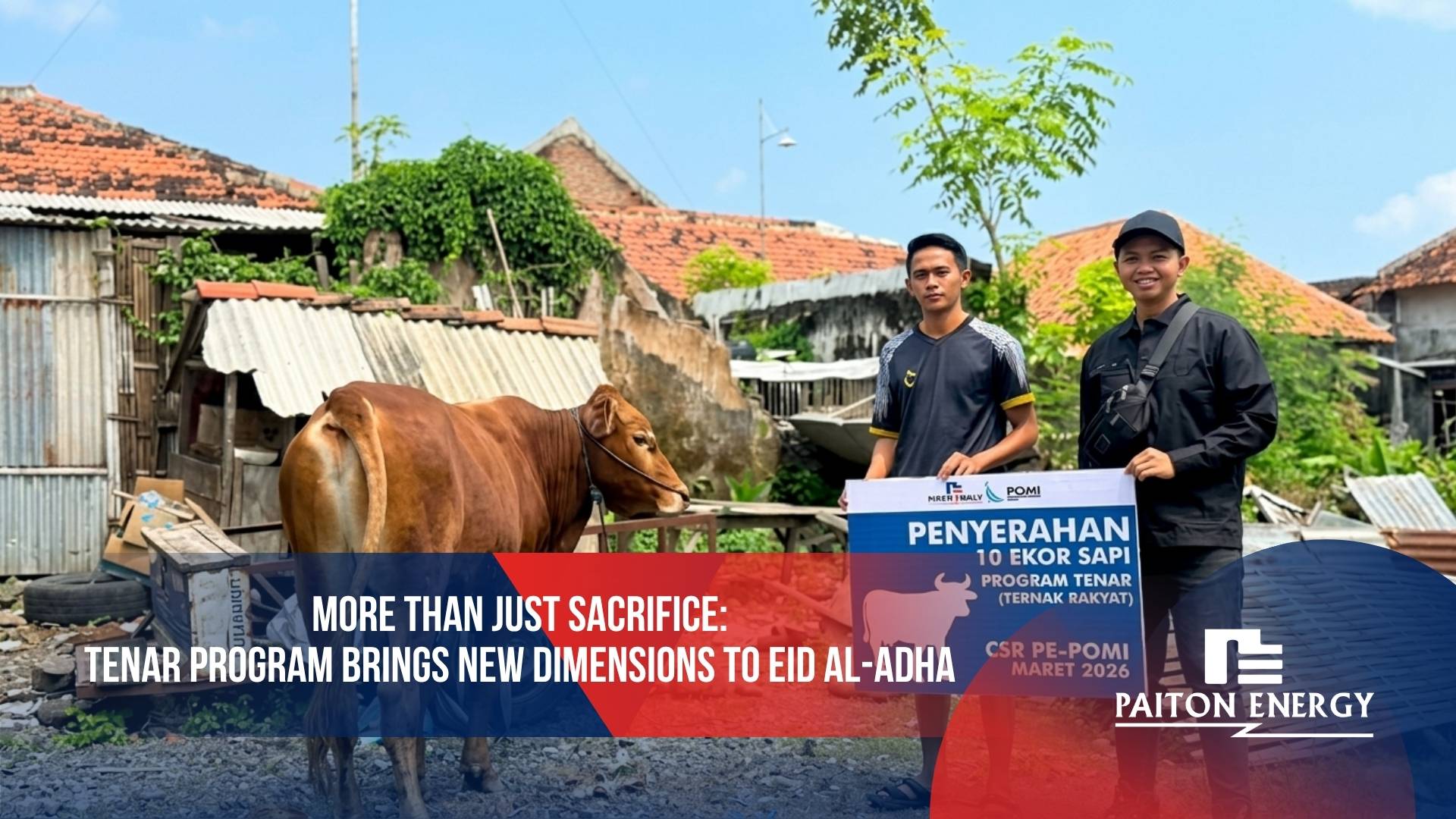
Recognizing this, in 2026, the companies introduced a breakthrough by adopting an empowerment-based approach through the TENAR (Ternak Rakyat) Program.
The core concept is to convert consumptive aid into productive assets. Sacrificial animals are no longer provided abruptly during Eid al-Adha; instead, they are distributed much earlier as livestock seedlings to be raised and fattened by the community.
The TENAR Program: An Initiative Based on Local Aspirations
This shift in concept was not a unilateral corporate policy but rather born from the initiatives and aspirations of the community itself.
Through the TENAR Program located in Pondokkelor Village, Paiton District, Probolinggo Regency, residents are encouraged to be more than passive beneficiaries; they are the primary actors in the livestock management process.
This program represents a strategic collaboration between:
- Corporate Social Responsibility (CSR): Acts as the initial stimulant providing business capital, livestock seedlings, feed, and other supporting facilities.
- Village-Owned Enterprises (BUMDes): Acts as the operational manager, technical consultant, and regulator of the livestock trade.
- Targeted Farmers (The Community): Holds full responsibility for daily maintenance, ranging from feeding to ensuring animal health according to established standards.
Education and Economic Efficiency
One of the primary advantages of the TENAR Program in commemorating Eid al-Adha is its educational value. Engaging the community from the start of the livestock rearing process fosters a sense of responsibility, ownership, and enhances their technical capacity in livestock management.
Economically, this model has proven significantly more efficient. With the same amount of funding as in previous years, the self-managed fattening process can yield a benefit value equivalent to five sacrificial goats.
This demonstrates that community independence can multiply the impact of every contribution provided. To ensure sustainability, the program includes business management training, animal health education, and regular monitoring of stable sanitation.
Social and Spiritual Impact
The efforts of PT Paiton Energy and PT POMI to commemorate Eid al-Adha through the TENAR Program create harmony between spiritual devotion and economic empowerment.
Residents are not only prepared to welcome the holiday with high-quality sacrificial animals resulting from their own hard work, but they also gain a stronger economic foundation through the business profits generated.
The spirit of togetherness built during the fattening process serves as valuable social capital for the future progress of Pondokkelor Village. Celebrating Eid al-Adha in a more productive manner proves that the values of sacrifice can be realized through tangible efforts to build village economic independence.
Through the TENAR Program, the benefits of Eid al-Adha are no longer fleeting; they become productive assets that continue to grow for the welfare of the Pondokkelor community.
The success of this transformation, from a charity-based model to empowerment, is expected to serve as a sustainable blueprint for future Eid al-Adha observances.
Thus, every time we welcome Eid al-Adha, we are not only celebrating a religious ritual but also celebrating economic growth and the resilience of a self-sufficient community.
Strengthening community capacity through the TENAR Program is a concrete manifestation of commemorating Eid al-Adha by addressing the root causes of poverty and providing real solutions for the future.